Generation 43
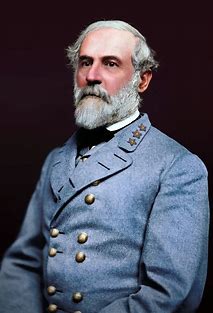
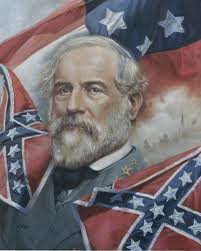
HUSBAND General Robert Edward LEE
Born 19 Jan 1807 in Stratford Hall; Westmoreland; VA
Married 30 Jun 1831 in Arlington; VA
Died 12 Oct 1870 in Lexington; Albemarle; VA
Burial Lee Chapel Museum - Lexington; Albemarle; VA
Father Major General Henry (Lighthorse Harry) LEE
Mother Ann Hill CARTER
WIFE Mary Anne Randolph CUSTIS
Born 01 Oct 1808 in Arlington; VA
Died 05 Nov 1873 in Lexington; Albemarle; VA
Burial Lee Chapel Museum - Lexington; Albemarle; VA
Father Colonel George Washington Park CUSTIS
Mother Mary Anne Randolph FITZHUGH
CHILDREN
1 Male Major General George Washington Custis LEE
Born 16 Sep 1832 in Fort Monroe; VA
Married in
Died 18 Feb 1913 in VA
Burial
Spouse
2 Female Mary Custis LEE
Born 12 Jun 1835 in Ravensworth Plantation; Fairfax; VA
Married in
Died 22 Nov 1918 in VA
Burial
Spouse
3 Male General William Henry Fitzhugh LEE
Born 31 May 1837 in Arlington House; VA
Married in
Died 20 Oct 1862 in Ravensworth Plantation; Fairfax; VA
Burial
Spouse
4 Female Ann Carter LEE
Born 18 Jun 1839 in Arlington House; VA
Married in
Died 20 Oct 1862 in NC
Burial
Spouse
5 Female Eleanor Agnes LEE
Born 1841 in Arlington; VA
Married in
Died 15 Oct 1873 in VA
Burial
Spouse
6 Male Robert Edward LEE Jr
Born 27 Oct 1843 in Arlington; VA
Married in
Died 19 Oct 1916 in Richmond; VA
Burial
Spouse
7 Female Mildred Childe LEE
Born Feb 1846 in Arlington; VA
Married in
Died 1905 in
Burial
Spouse
NOTES
Robert E Lee's wife; Mary Anne Custis; was the great-grand-daughter of First Lady Martha Washington.
Robert's father was also known as Lighthorse Harry Lee. Robert Edward was the 5th child. The family moved to Alexandria, Virginia, in 1810. For an unknown period, Robert attended a school at Eastern View in Fauquier County. By 1820 young Robert was a student at Alexandria Academy, where he finished his secondary school education no later than 1823. He excelled in mathematics. Robert's father was injured in a riot in Baltimore in 1812 defending a friend. Henry Lee did not recover from his wounds. He sailed for the West Indies in an attempt to recover but later died on Cumberland Island, Georgia in 1818. Robert was then left with his widowed mother and several siblings.
Robert E. Lee was appointed as a cadet at West Point on 1 July 1825 from Virginia. He graduated second in the class of 46 and was commissioned as a 2nd Lt. on 1 July 1829 in the Corps of Engineers. Robert was the first cadet to achieve the rank of Sgt. at the end of his first year. While he was on leave he experienced the trauma of having his mother die in his arms in August of 1829. Lee’s first army assignments were to help plan the construction of Fort Pulaski on the Savannah River in Georgia (1829–1831) and Fortress Monroe at Old Point Comfort in Virginia (1831–1834). In 1831 Lee was transferred to Fort Monroe, Virginia, and soon married Mary Custis, whom he had been courting since 1829. The wedding took place only after the Custis family relaxed their opposition to Mary's romance with the disgraced Light Horse Harry's son. While in Washington he was promoted to 1st Lt. on 21 Sept of 1836. Robert then traveled to St. Louis in the summer of 1837 to superintend works protecting the harbor of the city from shifts in the channel of the Mississippi. Except for occasional visits to Virginia, Lee remained at St. Louis until October 1840. He found the improvement of the Mississippi intellectually stimulating, and it brought him useful experience in cooperating with civil officials. Meanwhile he rose to captain on 07 July 1838.
War With Mexico
Cpt Robert E. Lee entered Mexico on 12 October 1846 as a staff engineer with the column under Brigadier General John E. Wool. Cpt Lee was ordered to join General Winfield Scott at Brazos, Texas in January of 1847. He was the chief engineer for General Scott in the planned invasion of the Mexican coast. Cpt Lee found a way to get around enemy forces which was instrumental in providing U.S. forces with a victory in the battle of Cerro Gordo on 17–18 April. He was promoted to Brevet Major on 18 Apr 1847 as a result of that success. At Churubusco, Lee again found a feasible route skirting a lava bed known as the Pedregal, to permit another turning of the Mexican defenses. Again, the outcome was swift American victory. In reward, Lee received a brevet as lieutenant colonel. After his service in the Mexican-American War Lt. Col. Lee returned to Washington on 29 June 1848. Robert E. Lee now a Brevet Lt. Col. became the Superintendent of West Point from 1852 until 1855. The eldest son of Robert E. Lee was George Washington Custis Lee. George attended West Point during the time his father was the Superintendent. George graduated in 1854 and was like his father in the Corps of Engineers. Brevet Lt. Col. Lee was promoted to Lt. Col. of the 2nd U.S. Cavalry on 3 Mar 1855. Lt. Col. Lee was sent to Camp Cooper in Texas.
Harpers Ferry
Lt. Col. Lee returned to Arlington, Virginia in 1859 on leave to attend to the affairs of the estate of his father in law. While at home on leave news came to the War Department of an attack on the Federal Arsenal at Harper's Ferry. Lee received orders to ride immediately for Harper's Ferry. Robert was a Brevet Colonel in October of 1859 when John Brown led an attack on the Federal Arsenal at Harper's Ferry Virginia. Col. Lee was ordered to suppress the insurrection. He was in command of a force of United States Marines in the assault which yielded the capture of John Brown. J.E.B. Stuart was a young Lt. of Cavalry and was on the staff of Col. Lee. He was with Col. Lee at Harper's Ferry. After these events were over Robert remained in Virginia until Feb of 1860. He then returned to San Antonio and his command in Texas. On March 15 he left San Antonio for Fort Ringgold and Fort Brown to pursue Juan N. Cortina. The election of 1860 brought Abraham Lincoln into the office of President of the United States of America. With that came secession by South Carolina in December followed by 6 other southern states. He was in San Antonio in June of 1860. His wife and children were at Arlington in Virginia. He returned home to Arlington to be with his family. Lt. Col. Lee was ordered back to Washington by General Scott in Feb of 1861. Texas seceded from the Union in February of 1861. Lee had been promoted to Colonel of the 1st U.S. Cavalry on 16 Mar 1861. After the formation of the Confederate States of America there was a demand for the surrender of all U.S. military forts within the Confederacy. Lincoln would not surrender Fort Sumter and instead attempted to resupply the fort from the sea. On April 12, 1861 after negotiations failed, Confederate batteries under the command of General P.G.T. Beauregard opened fire on Fort Sumter. Lee's home state of Virginia seceded on April 23, 1861. Though he denounced Virginia's secession from the Union, Lee refused Abraham Lincoln's invitation to take command of the entirety of the Union Army, stating he would ...never bear arms against the Union, but it may be necessary for me to carry a musket in the defense of my native state, Virginia, in which case I shall not prove recreant to my duty. He resigned from U.S. Army on 25 Apr 1861.
Confederacy
Col. Lee returned to Virginia and to his home at Arlington and on 10 May 1861 the Confederate War Department gave Lee command of its forces in Virginia. Lee was commissioned a brigadier general in the Confederate regular army on 14 May 1861. Lee saw his first campaign for the Confederacy end in defeat at the battle of Cheat Mountain or Elkwater. On 31 August 1861 Lee had been confirmed as a full general of the Confederate regular army, President Davis next sent him to try to shore up another crumbling front. Unluckily, Lee arrived at Charleston to command the South Atlantic coast defenses on 7 November, the very day that the U.S. Navy captured the defenses of Port Royal Sound in South Carolina. On 2 March 1862 Davis summoned Lee back to Richmond to resume his duties as adviser. Lee made a decision on strategy to take the offensive against the Union. He arranged to reinforce Major General Thomas J. “Stonewall” Jackson’s Army of the Valley sufficiently to permit it to undertake the Shenandoah Valley campaign of 8 May–9 June 1862. Soon Lee confronted that offensive directly. In March, McClellan had moved his main force by sea from Washington to Fort Monroe; then he began an advance toward the Confederate capital by way of the peninsula between the York and James rivers. On 31 May, General Joseph E. Johnston, commanding the Confederate forces opposing him, was wounded at the battle of Fair Oaks or Seven Pines. The next day Lee succeeded to Johnston’s command, which he promptly designated the Army of Northern Virginia. Lee applied his principles of concentrating force and seizing the initiative. He had Jackson join him with the Valley Army, and, thus reinforced, he conducted a series of attacks against McClellan just outside Richmond in the Seven Days battles of 25 June–1 July 1862. This saved Richmond.
Second Battle of Manassas (Bull Run)
On 29–30 August 1862, Lee defeated Pope’s army reinforced by part of McClellan’s, at the Second Battle of Manassas. General Longstreet had launched a counter attack against Pope's army and crushed General Pope's forces with a loss of 15,000 men. After the success of second Manassas and the northern Virginia campaign General Lee pressed his advantage launched an invasion of the North, crossing the Potomac into western Maryland on September 5. In taking his army across the Potomac River General Lee had in mind strategic, logistical, and political factors. General Lee by moving north into Maryland would take pressure off of Virginia and allow the state to recover from the ravages of war. By moving north General Lee put his army northwest of Washington forcing the Federals to keep their forces between Lee and Washington.
Antietam
Maryland had vast agriculture assets that could feed Lee's army, McClellan united his army with the Army of Virginia and marched a force of 87,000 Union troops northwest to block Lee’s invasion. On September 17, the on Antietam Creek in Sharpsburg, Maryland General McClellan attacked the 45, 000 Confederates under General Lee. On the 18th, both sides remained in place, too bloodied to advance. Late that evening and on the 19th, Lee withdrew from the battlefield and slipped back across the Potomac into Virginia. The bloodiest single day in American military history ended in a draw with over 27,000 casualties.
Fredericksburg
After Antietam, President Lincoln replaced General McClellan with General Burnside on the 7th of November 1862. By mid-November, General Burnside had moved two advance corps to Falmouth, located on the north bank of the Rappahannock River across from Fredericksburg. In response, General Lee rushed his troops to dig in positions in the hills south of the Rappahannock before the bulk of Burnside’s army could arrive. The river was too deep to ford so Burnside had to wait for pontoons to arrive before crossing . He crossed the river on 11 December with over 120,000 troops. On the 13th of December Burnsides forces launched a two-pronged attack on the right and left flanks of Robert E. Lee’s 80,000-strong Army of Northern Virginia at Fredericksburg. General Lee had offered only token resistance to the forces crossing the river giving General Longstreet's Corps and General Stonewall Jackson's Corps time to prepare defenses. Longstreet's Corps occupied Marye's Heights above the town of Fredericksburg. The battle resulted in 13,000 Union casualties to 5,000 Confederate casualties. Lincoln replaced Burnside with General Hooker in April.
Cancellorsville
May 1–6, 1863 - Robert E. Lee and the Army of Northern Virginia defeat Joseph Hooker's Army of the Potomac at the Battle of Chancellorsville. The brilliant victory comes at great cost when Confederate general Thomas J. "Stonewall" Jackson is mortally wounded by friendly fire.
Gettysburg
July 1–3, 1863 - Union general George G. Meade defeats Robert E. Lee at the Battle of Gettysburg, forcing the Confederate Army of Northern Virginia to retreat toward Virginia. Autumn 1863 - Following his defeat at the Battle of Gettysburg, Confederate general Robert E. Lee fails to maneuver Union general George G. Meade into another major engagement during the Bristoe Station Campaign.
Battle of the Wilderness
May 5–7, 1864 - Confederate general Robert E. Lee clashes for the first time with the new Union general-in-chief Ulysses S. Grant at the Battle of the Wilderness during the Overland Campaign. Casualties are heavy for both armies, but unlike his predecessors, Grant refuses to retreat.
Spotsylvania Court House
May 8–26, 1864 - At the battles of Spotsylvania Court House and North Anna River during the Overland Campaign, Confederate general Robert E. Lee again clashes with Union general Ulysses S. Grant and the Army of the Potomac. Grant continues to maneuver south.
Cold Harbor
May 31–June 12, 1864 - Confederate general Robert E. Lee stalls Union general-in-chief Ulysses S. Grant's drive southward during the Overland Campaign at the Battle of Cold Harbor, where the Union suffers 7,000 casualties on the morning of June 3 alone.
Siege of Petersburg
June 16, 1864–March 25, 1865 - The Union Army of the Potomac lays siege to Petersburg. The siege is characterized by 30 miles of trenches stretching Confederate defenses thin, and occasional pitched battles, including the Battle of the Crater on July 30, 1864, and the more-decisive Battle of Five Forks on April 1, 1865.
April 2, 1865 - After Union forces break through Confederate lines around Petersburg at the Battle of Five Forks a day earlier, Richmond is evacuated.
April 6, 1865 - At the Battle of Sailor's Creek, a trapped and exhausted Army of Northern Virginia suffers more than 8,700 casualties, or about 20 percent of its men. Of those, 7,700 are captured, including Confederate General Richard S. Ewell.
Appomattox
April 9, 1865 - Confederate general Robert E. Lee and the Army of Northern Virginia surrender to Union General Ulysses S. Grant at Appomattox Court House.
April 10, 1865 - Confederate general Robert E. Lee's General Orders No. 9, his farewell address to the Army of Northern Virginia, praises his troops' "unsurpassed courage and fortitude." He also tells them they had been "compelled to yield to overwhelming numbers and resources." Both arguments become fixtures of the Lost Cause interpretation of the Civil War.
After the War
His home at Arlington had been taken from him and his family during the war. Lee returned to Richmond and stayed there several months. The trustees of Washington College in Lexington, then looking for a new president, decided that Lee was the perfect choice. They offered him the position and he accepted. Robert E. Lee moved his family to Lexington, Rock Bridge, Virginia in Sept of 1865. He went to work improving the college. He and his family were living in Lexington in 1867. Lee worked tirelessly for the college and his health was affected. He had a heart condition that had been since the war. On September 28, 1870, he suffered a massive stroke. Two weeks later, on October 12, Robert E. Lee died in his home on the college campus.