TOWNLEY - a name born on the battlefield and baptized in the blood of a thousand French Knights
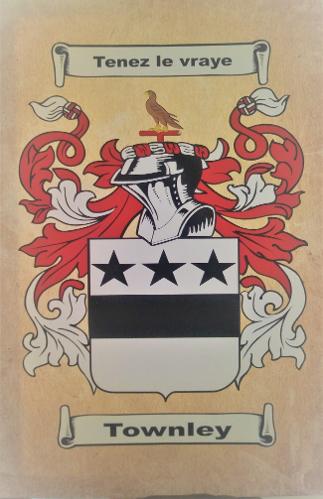
Townley Crest

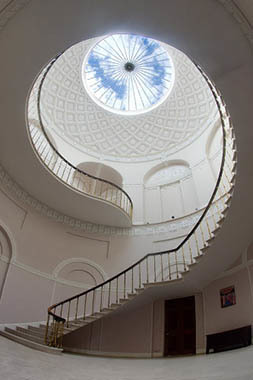
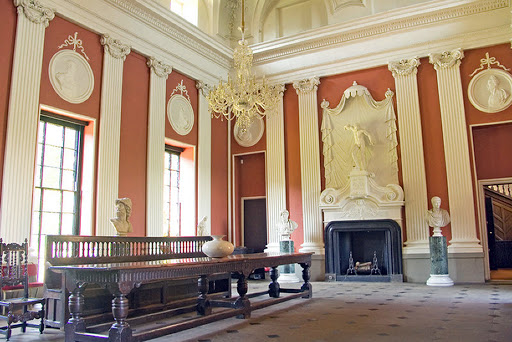
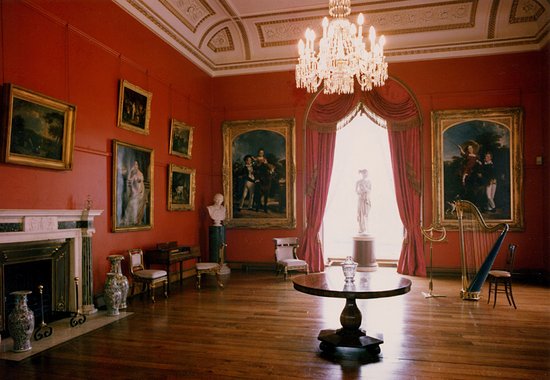
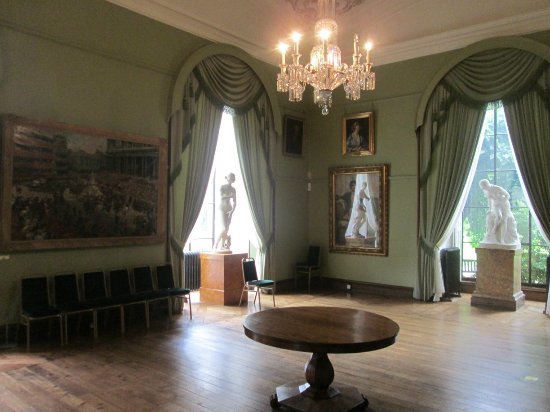
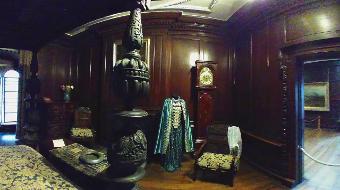
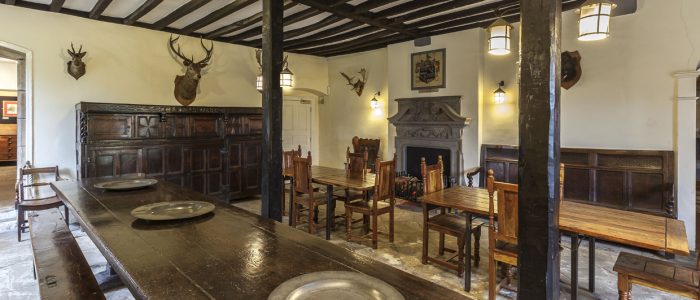
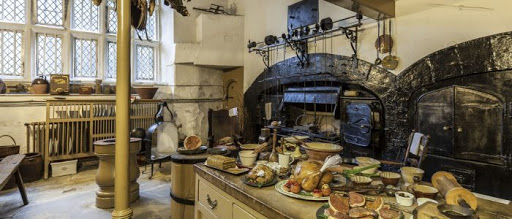
Towneley Hall
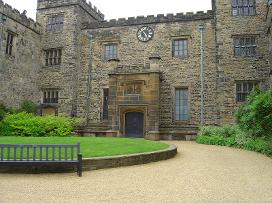
Towneley Hall
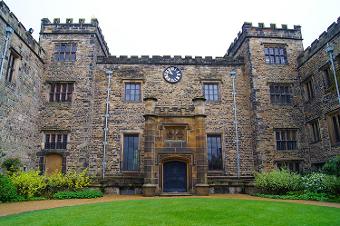
Towneley Hall

Towneley Hall

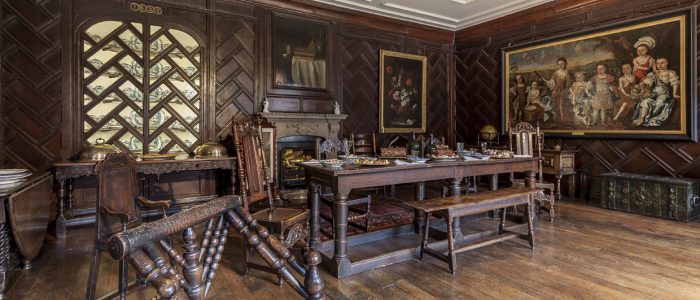
Dining Room
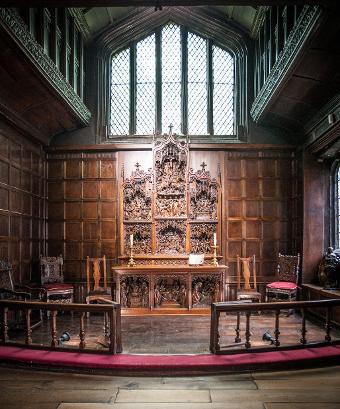
Chapel
Townley is a name whose history on English soil dates back to the wave of migration that followed the Norman Conquest of England of 1066. The Townley Family lived in the settlement of Towneley; near Burnley; in the county of Lancashire; or by and clearing in which a farm was situated. The surname Townley thus belongs to both the category of habitation names, which are derived from pre-existing names for towns, villages, etc; and class of topographic surnames; which were given to people who resided near physical features such as hills, streams, churches or types of trees. It was in the 5th century that the Angles and Saxons migrated to England, after Rome had withdrawn it troops. Historians researched ancient and modern documents and discovered the Townley surname to have originated from these Anglo-Saxon tribesmen. The Lancashire placename is first recorded as "Tunleia," and according to the Dictionary of English Place Names translates as the wood or clearing belonging to the town from the pre 7th century Olde English 'tun leah'. This may mean that 'Tun-leah' was originally an outpost of Burnley itself, which would have been the main manor.
The first recorded spelling of the family name is shown to be that of Richard de Tunleie. This was dated 1214, in the Fines Court records of the county of Suffolk, during the reign of King John of England, 1199 - 1216. Surnames became necessary when governments introduced personal taxation. In England this was sometimes known as the Poll Tax. Throughout the centuries, surnames in every country have continued to "develop" often leading to astonishing variants of the original spelling.
England, more than many other European nations, has collected and maintained records of births, deaths, marriages, and land transfers for over 1000 years. From these documents and other sources, we have deemed that the Townley surname was originally found in Lancashire where they were descended from Spartlingus; the first Dean of Whalley about 896 A.D. Descended was Liwlphus, Cudwlphus, Henricus the great Baron of Whalley. He was followed by Robertus, Geoffrey who married the daughter of Roger de Lacy, Constable of Cheshire in 1193.
"An estate in Lancashire, which belonged to this ancient and distinguished family, whose pedigree is said to be traced to the time of King Alfred, and to Spartlingus, first Dean of Whalley, who flourished about the year 896. The line of this personage terminated with an heiress, Cecilia of Towneley, in the XIV. century, who married John del Legh, and conveyed the estate to his family. He died in or about 1330, and his great-grandson resumed the ancient surname of Towneley. John del Legh was a cadet of the great Cheshire family of that name. Towneley Hall is still the seat of this race, who may well challenge comparison in point of venerable antiquity with any family in England."
Throughout the course of the research, the Townley surname was found with various spellings; such as: Townley, Towneley, and these changes in spelling occurred in references to the same person. Even such literate people as Shakespeare signed their name with different spellings. Some variations resulted from the influence of court languages such as Latin and French on the spelling of a name. In general, however, people paid more attention to how a name was pronounced than to how people thought it should be spelled. Thus you can see how even Tunleah or Tunleie can evolve into Townley.
The Townley family descended from a culture which shaped England more than any other. Coming to England from what is now the state of Schleswig-Holstein in Germany, the Angles and Saxons dominated the countryside by force and pushed the native Britons into Wales. The society of this early Germanic people consisted of groups of families uniting around a chieftain or king. This social unit tended to remain small. Anglo-Saxon Britain was divided into many kingdoms until unification under Egbert in the 9th century. Even with the merging of Angle and Saxon kingdoms, real unity did not exist until after the Norman conquest.
Anglo-Saxon rule came to an end in 1066, when the Normans invaded successfully. Despite this, the culture of people was largely and Angle-Saxon culture. However, politics and high society was to be dominated by the Norman French. English society ceased to resemble the old tribal structure consisting of bands of families grouped around different leaders. However England was slowly developing into a nation.
The Townley family was found in the county of Lancaster. Geoffrey was granted the lands of Townley and was Lord of the manor. Descended of Richard of Townley who was appointed sheriff of Lancaster, by John of Gaunt in 1375, 76 and 77. Sir Richard Towneley was descended and he was also Sheriff of Lancaster from 1531. Charles Towneley in 1737 was the 29th Lord of Towneley from Spartlingus. Their present seats are at Dyneley, and Fulbourn. Notable members of the family include Spartlingus living at the time of King Alfred the Great.
The Townley family survived the Middle Ages, despite famine, plagues, and the trials of daily life. However in the 17th century political and religious upheaval forced many families to leave England. During this period the middle class because more powerful, and for the most part was ready to assert itself in Parliament. The conflict which resulted divided the country into two very powerful factions. This century also saw renewed tensions between the Protestants and Catholics. Together these factors were enough to drive families from their homeland.
In Ireland, Protestant settlers and the followers of Cromwell were granted lands taken from the native Irish. Other families came to Ireland simply to escape their war-torn home. In Ireland the family settled in the counties of Louth, Cavan, and Dublin since the 16th century.
Turmoil at home made the New World appear attractive to many families in England. They migrated to Canada, the United States, Australia, and some moved to continental Europe. Members of the Townley family risked the hazardous voyage to start a new life in new lands. Families left for the New World in extremely large numbers. The long journey was the end of many immigrants and many more arrived sick and starving. The voyages were expensive, crowded, and difficult. Those families who made it were rewarded with freedoms and opportunities far greater than they had known at home in England. These emigrant families went on to make significant contributions to these emerging colonies in which they settled.
Townley's have always been know to contribute greatly to society as whole. Some notable with the Townley surname include:
- Charles Towneley (1600-1644); and his son, Richard Towneley (1629-1707), an English mathematician and astronomer from Towneley near Burnley, Lancashire who first postulated a theory that Robert Boyle later publish as Boyle's Law, but Boyle referred to as Mr Towneley's hypothesis
- Christopher Towneley (1604-1674), was an English antiquary; called ‘the Transscriber,’ son of Richard Towneley of Towneley Hall. Many years were spent by him in transcribing public records, chartularies, and other evidences relating chiefly to Lancashire and Yorkshire. These transcripts have since proved a valuable storehouse of materials for county historians and genealogists.
- Sidney Dean Townley (1867-1946), American astronomer and geodeticist, eponym of the Townley lunar crater
- Arthur Charles Townley (1880-1959), American Socialist Party organizer
- James Townley (1774-1833), English Wesleyan divine, son of Thomas Townley, a Manchester tradesman
- James Townley (1714-1778), English author of ‘High Life below Stairs,’ born in the parish of All Hallows, Barking, the second son of Charles Townley, merchant, of Tower Hill, and of Clapham, Surrey
- Charles Townley (1737-1805), English country gentleman, collector of the Townley Marbles
- Simon Townley (b. 1963), English piano player and composer
- Sir Charles Townley (1713-1774), British Garter King-of-Arms, eldest son of Charles Townley of Clapham, Surrey; he descended from a younger branch of the ancient family of Towneley Hall, near Burnley, Lancashire
- Reginald Colin "Rex" Townley (1904-1982), Australian politician, Leader of the Opposition in Tasmania (1950-1956)
- Michael Townley (b. 1934), Australian politician, former Tasmanian senator
- Thomas Owen Townley (1862-1935), Canadian politician, 8th Mayor of Vancouver, British Columbia
All Photos copyright and are property of their respective owners